Lat/Long to DMS ConverterConverters
Latitude and longitude between decimal degrees and DMS.
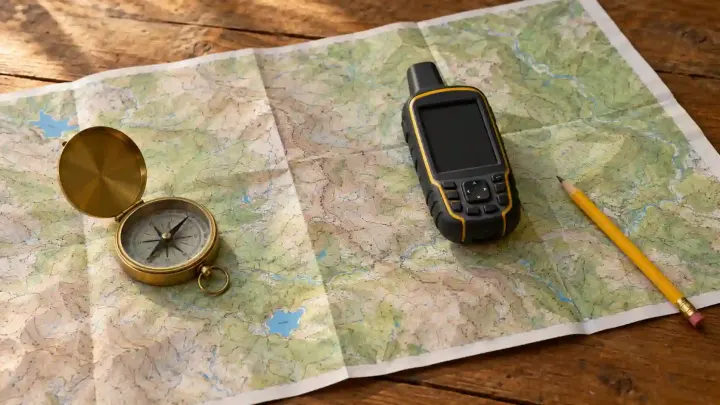
A map app gives 35.6892, a survey sheet or flight plan wants 35° 41′ 21.12″ N. Split the fraction of a degree into minutes and seconds, add a hemisphere letter, and both forms point at the same spot.
Web maps and most apps use decimal degrees, such as 35.6892. Paper maps, surveying, and aviation use degrees, minutes, and seconds: 35° 41′ 21.12″ N. Marine and handheld GPS units often use degrees and decimal minutes: 35° 41.352′ N. All three describe the same point.
Mixing them up moves the point. Typing 35.4121 because a coordinate read 35° 41′ 21″ puts it about 30 km south of where you meant. Dropping the minus sign from a longitude west of Greenwich puts it on the other side of the world.
The Lat/Long to DMS Converter turns decimal degrees into DMS and reads DMS or decimal minutes back into decimal degrees. The sign becomes the hemisphere letter: positive latitude is N and negative is S, positive longitude is E and negative is W. You choose how many decimals the seconds get. Latitude must be between −90 and 90 and longitude between −180 and 180, and coordinates are taken as WGS 84 with no datum conversion.
To confirm a converted point is where you expect, the Distance Calculator accepts either form and gives the straight-line distance and the bearing between two points. If a point that should be next door comes back hundreds of kilometers away, a sign or a field was swapped.
Write the degrees with the fraction as decimals, latitude first, and use a minus sign for south and west, for example 35.6892, 51.3890.
35° 41′ 21.12″ N, when it is a latitude.
A point west of Greenwich. −0.1276 is 0° 7′ 39.36″ W.
Five decimal places locate a point to about a meter, which is enough for most uses.
Tools used in this guide
Latitude and longitude between decimal degrees and DMS.
Great-circle distance between two latitude/longitude points.